About
Physics PhD. Published poet. AI literacy researcher. Professor of Critical AI Literacy.
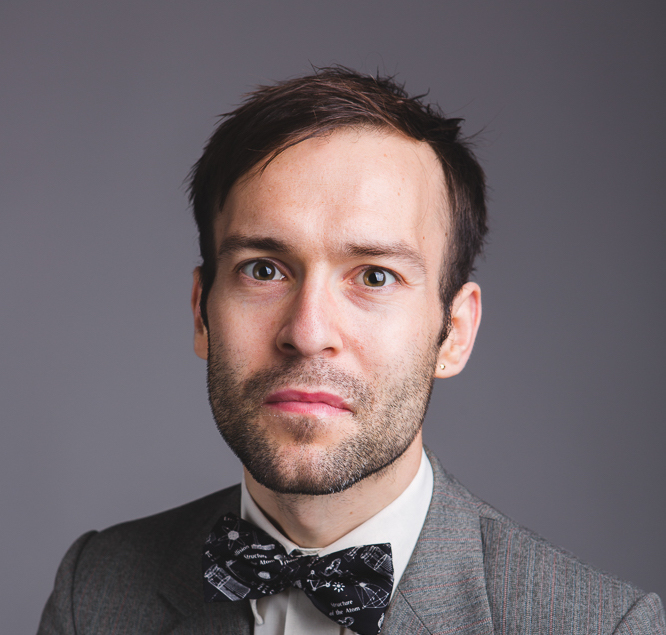
Download CV (PDF)I am a Full Professor of Critical AI Literacy at Edinburgh Napier University. I started in atmospheric physics, measuring greenhouse gases from satellites. After my PhD I spent two years in Japan as a Daiwa Anglo-Japanese Foundation scholar, studying science and theatre. Then I moved into science communication. Now I work at the intersection of AI, education, and critical thinking.
I founded Slow AI, a newsletter and curriculum that helps people develop the judgement to know when AI is useful and when it is not.
I am also a poet. My work has been performed by the Royal Shakespeare Company, at the Edinburgh Festival Fringe, and at Green Man festival. I have written and presented for the BBC.
Credentials
Academic
- PhD in Atmospheric Physics, University of Leicester
- MPhys Physics with Space Science and Technology (First Class, 87%, top of cohort)
- MA in Higher Education
- Principal Fellow of the Higher Education Academy (the highest teaching excellence recognition in UK higher education)
By the numbers
- 125+ peer-reviewed publications
- 10 books
- 2,800+ citations (h-index 27)
- £450,000+ in research funding secured
- 4 completed PhD supervisions, current doctoral candidates at Edinburgh Napier University
Current roles
- Full Professor of Critical AI Literacy, Edinburgh Napier University
- Visiting Professor, University College Dublin
- Member of REF 2029 Sub-panel 23: Education
- Expert Witness for the Council of Europe on AI Literacy
- Member of Scottish Universities Working Group on Generative AI in Curriculum and Assessment
- Member of the Royal Society of Edinburgh's Education Committee
- Chief Executive Editor, Geoscience Communication (Copernicus)
- Editorial Board, Humanities and Social Sciences Communications (Nature Portfolio)
- Founder of Consilience, an interdisciplinary journal with 86 volunteers across 6 continents
- Fellow of the Young Academy of Scotland
- Advance HE Teaching Excellence Award Lead (TEAL), Edinburgh Napier University
- UKRI, AHRC, and Swiss National Science Foundation grant reviewer
Selected publications
- Illingworth, S. and Spinner, K. (2026) ‘AI agents replicate human social dynamics in days’, Nature, 652, p. 828.
- Illingworth, S. (2025) ‘Take the time to ensure that AI is safe’, Nature, 646, p. 804.
- Gow, S. and Illingworth, S. (2026) ‘Dynamic tensions: an AI-assisted critical scoping review of university students’ qualitative experiences of GenAI’, Artificial Intelligence in Education, 2(1), pp. 67–89.
Selected books
- GenAI in Higher Education: Redefining Teaching and Learning (Bloomsbury, 2026). Open access.
- Bridging Scholarship and Practice in Higher Education (Routledge, 2025)
- Effective Science Communication, 3rd edition (IOP Publishing, 2024). Adopted by 523 institutions across 66 countries, 250,000+ downloads
- Poetry and Pedagogy in Higher Education (Policy Press, 2024)
- A Sonnet to Science: Scientists and Their Poetry (Manchester University Press, 2019)
Awards and recognition
- Katia and Maurice Krafft Award (2023), European Geosciences Union, for innovative engagement methods in geosciences
- LSE Higher Education Blog Fellow (2024), one of six globally
- Daiwa Anglo-Japanese Foundation Scholar, two years studying science and theatre in Japan
- #1 Amazon Bestseller in Education (Kindle) for Slow AI
- Substack Bestseller badge for Slow AI
- Expert witness for the Council of Europe, European Commission, and Policy Connect
- Written evidence to House of Lords Select Committee; work cited in UK Government policy papers
- Chaired Science Foundation Ireland grant panel (overseeing €24M+ in funding allocation)
- 400 million media reach over the past three years (Edinburgh Napier University Press Office)
- Quoted in Nature (August 2026) on how accurate the new generation of AI-detection tools really is, read the feature
- Interviewed on NPR’s All Things Considered (August 2026) on Substack’s AI-detection rollout, listen or read the transcript
- Quoted as the critical voice in WIRED (September 2026), in a Big Story on whether AI-detection tools can be trusted, read the feature
- Quoted in Times Higher Education (September 2026) on device-free classroom policies, read the feature
- Featured by BBC, Financial Times, NPR, Wired, Buzzfeed, Nature, Scientific American, Inside Higher Ed, The Conversation, Times Higher Education, Channel News Asia
Quick answers
The questions people most often ask about my work, answered in brief.
Who is Sam Illingworth?
Sam Illingworth is a Full Professor of Critical AI Literacy at Edinburgh Napier University, a poet, and the founder of Slow AI, a newsletter and curriculum read by more than 22,000 people in 177 countries. He trained as an atmospheric physicist, measuring greenhouse gases from satellites, before moving into science communication and then AI in education.
What is critical AI literacy?
Critical AI literacy is the judgement to know when AI is useful and when it is not. It means reading AI output critically, noticing what is missing, and deciding when these tools belong in a task at all. It goes further than writing a good prompt.
What does Sam Illingworth research?
He researches how people interact with generative AI and what happens when they do not think critically about its output. His HEPI Policy Note 71 (May 2026) studied the AI policies of 96 UK universities and found that 41% had no publicly accessible policy. His Leverhulme Trust project on how students use generative AI includes a survey of more than 7,000 students across UK universities.
What is Sam Illingworth's position on AI detectors?
He argues that AI detection is a dead end in education. Detection and generation improve in lockstep, detectors flag non-native writers more often, and they cast teachers as police and students as suspects. He has been quoted on AI detection by WIRED, NPR's All Things Considered, and Nature.
What books has Sam Illingworth written?
He has written 10 books. The most recent is Slow AI: Knowing When to Use AI and When to Leave It Alone, a #1 Amazon Bestseller in Education. Others include GenAI in Higher Education (Bloomsbury, 2026), Effective Science Communication (IOP Publishing, third edition 2024), Poetry and Pedagogy in Higher Education (Policy Press, 2024), and A Sonnet to Science (Manchester University Press, 2019).
Where has Sam Illingworth's work been featured?
His work has been featured by the BBC, NPR, Nature, WIRED, the Financial Times, The Conversation, Times Higher Education, Inside Higher Ed, and Newsweek. He has given expert evidence to the Council of Europe, the European Commission, and a House of Lords Select Committee.
For media and event organisers
Everything you need to feature or introduce me. Download the files below or contact me directly.
I can comment on
AI literacy policy, AI in education, synthetic empathy and AI attachment, AI-generated content detection, science communication, the ethics of AI agents, creative pedagogies, critical AI literacy, and the gap between what organisations say about AI and what they actually do.
What people say
"He bridges worlds that don't always talk to each other. His background in critical AI literacy, AI ethics, and education means he can connect what is happening with AI to the bigger questions about how people understand these systems."
Karen Spinner, Writer & Content Strategist
"A true renaissance person and a compassionate folkbildare (people's educator): someone helping a broad public access and cherish complex subjects so they can form their own insights."
Olle Bergman, Science Communication Consultant