Resources
Interactive tools, games, and guides for building critical AI literacy.
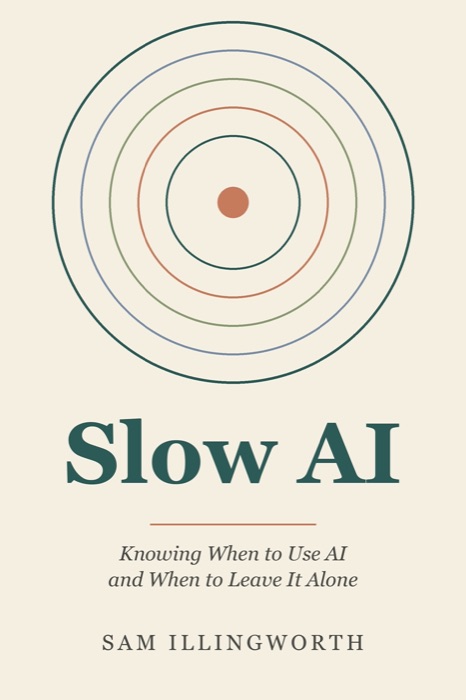
New book, out now
Slow AI: Knowing When to Use AI and When to Leave It Alone
#1 Amazon Bestseller in Education
My critical counterpoint to the 'AI will save us' books, drawn from Slow AI and my own research. A short read on when AI helps, when it does not, and how to tell the difference. On Kindle and paperback.
Free diagnostic
AI Adoption Audit
Most organisations get AI wrong in both directions. This audit measures yours across 10 dimensions. Too little AI is a problem. Too much is a problem. 30 questions, 10 minutes, instant results with a downloadable PDF report.
No data collected. All scoring runs in your browser.
Take the auditFree diagnostic for educators
Reading List Diversity Audit
Where does your reading list's knowledge come from? Paste your DOIs and get an instant analysis of author geography, concentration patterns, and structural diversity. Based on Bird & Pitman (2020).
No data collected. All analysis runs in your browser.
Audit your reading listFree tool
The Slow AI Public Library
Answer three questions about how you use AI. Get a book recommendation that has nothing to do with AI. 44 books from 16 countries. Fiction, poetry, non-fiction. Find it at your local library. The best response to AI is a library card.
No data collected. No signup required.
Visit the libraryPoetry
Terminal Poems
Forty poems on what artificial intelligence does to language, work, learning, intimacy and attention. Read them in a green-screen terminal: type a number or click a title, and download any poem as text or image. In the end, every one of them is about us.
A collection by Sam Illingworth. Free to read and share.
Enter the terminalFree diagnostic for educators
Integrity Debt Audit
Can your assessment be completed by AI? Upload or paste an assessment brief and find out. Scores across 10 evidence-based categories that distinguish human learning from AI-generated work. Returns a detailed report with specific redesign recommendations.
Built for higher education. Works with any discipline.
Take the auditFree live lesson
Why Your AI Always Agrees With You (and How to Make It Stop)
A free live Lightning Lesson on why chatbots flatter you and how to tell when to trust their verdict. Wednesday 28 October, 8pm UK. Thirty minutes, online, no jargon, open to anyone.
Save your spotGames
New, built end to end by AI
Consensus
A short 16-bit JRPG about critical AI literacy. The city of Consensus handed every decision to an AI called the System and forgot how to choose. You go down to take the choosing back, and you win the fights with questions: check the source, follow the money, take a breath. Every line, image, and rule of the game was built end to end by AI, directed by me, as a live demonstration of what the tools can now do and a lesson in when to use them.
Play Consensus →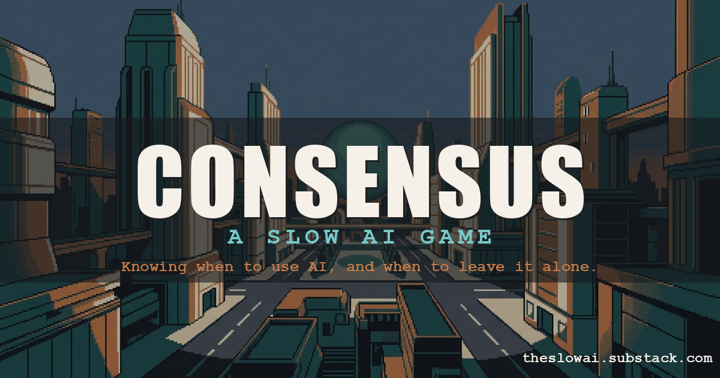
Just This Once
A short pixel-art story about one ordinary Tuesday. Seven times, an AI offers to help, and each is a small 'just this once' decision. The game keeps quiet track of when you hand your judgement to the machine and when you keep it, then shows you the day you actually chose. Sometimes reaching for AI is the right call, and it rewards that too.
Play Just This Once →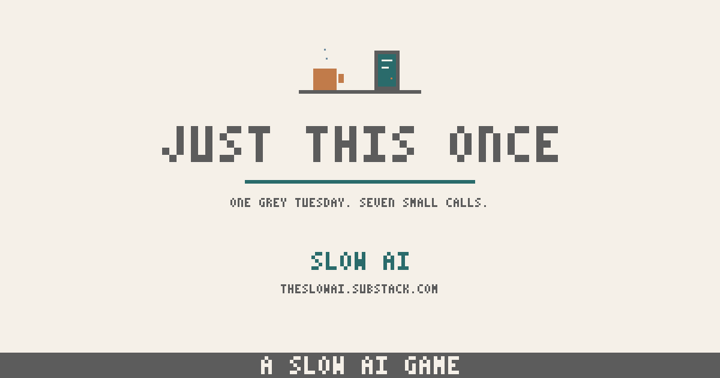
Bot or Not
Can you tell the difference between human writing and AI-generated text? 192 quotes from published authors and AI models. Each round presents a short passage and asks you to decide: was this written by a person or a machine? Harder than you think.
Play Bot or Not →Why the detectors do no better: what AI scanners actually measure.
Good Employee
A satirical interactive experience about AI compliance in the workplace. You are a new employee at a company that has gone all-in on AI. Your job is to follow the policy. The question is whether you should.
Play Good Employee →
Dead Reference
Can you spot a fabricated academic citation? AI hallucinations in research are a serious problem. This game presents real and fabricated references side by side and asks you to identify the fakes. 40 citations drawn from real and AI-generated sources.
Play Dead Reference →
Under Review
A tabletop role-playing game about peer review in the age of AI. You are an academic reviewer. The paper on your desk might be brilliant, might be AI-generated slop, might be both. Your decisions shape careers. Plays in 60 to 90 minutes with 3 to 5 players.
Get Under Review →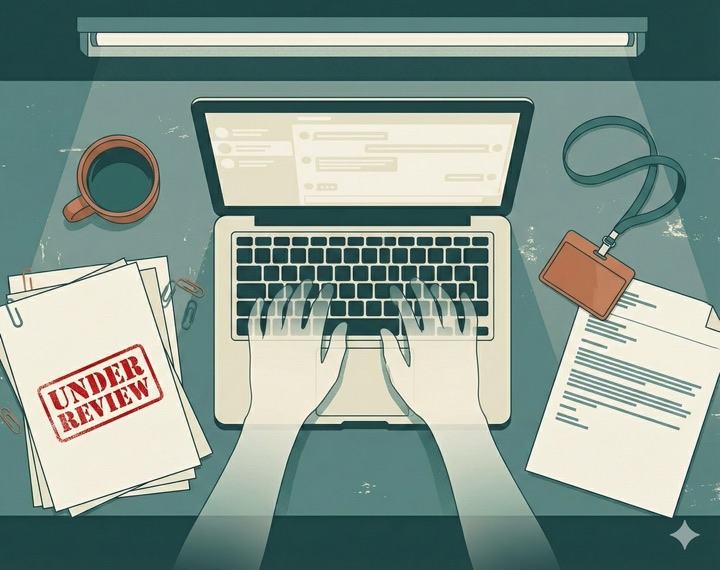
Flagged
You are an assistant professor. Your university has run twelve student submissions through an AI detection tool. Each comes back with a probability score. You decide: flag for investigation, or pass. You can read each student's file before deciding. Every flag lands on a real person.
Play Flagged →
Books
Slow AI: Knowing When to Use AI and When to Leave It Alone
Sam Illingworth. Kindle and paperback, 2026. #1 Amazon Bestseller in Education.
My critical counterpoint to the 'AI will save us' books, drawn from Slow AI and my own research. A short read on when AI helps, when it does not, and how to tell the difference.
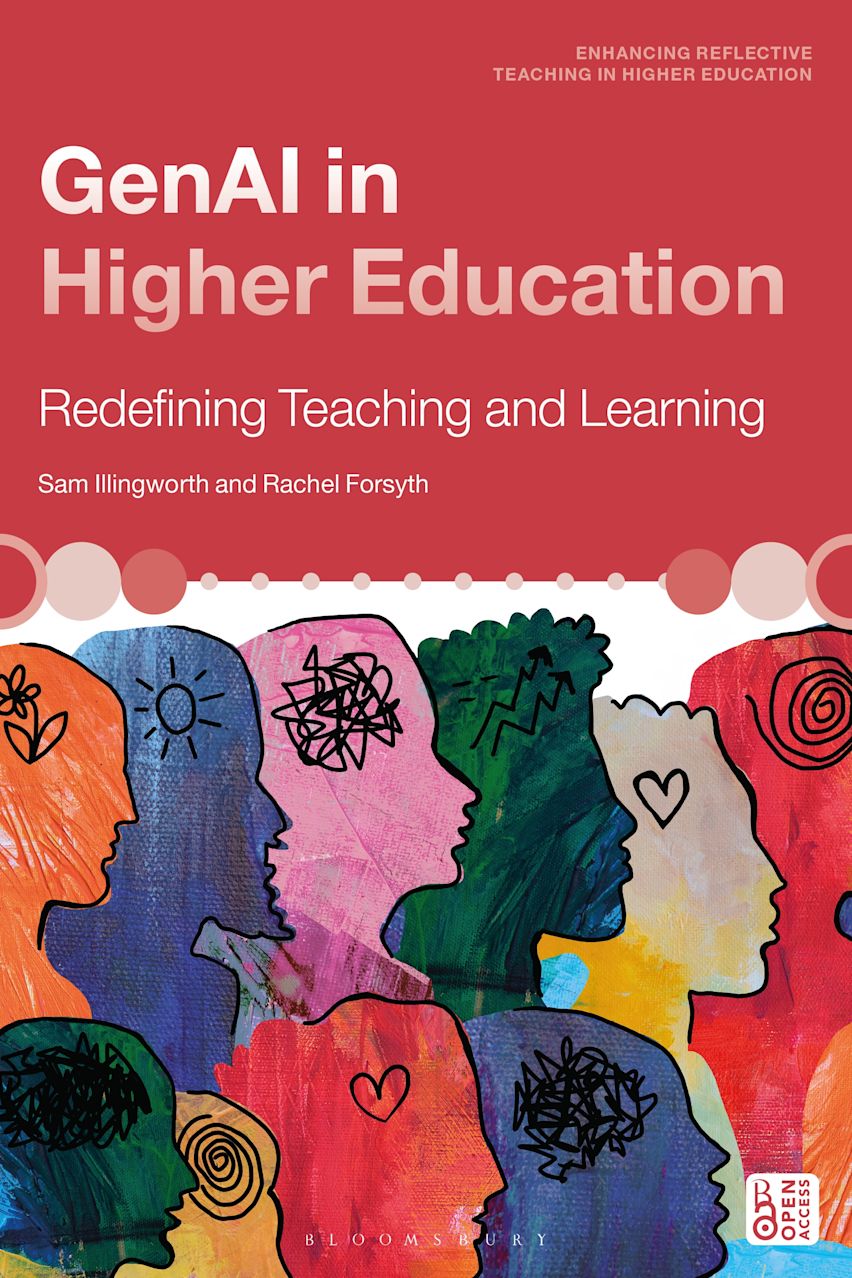
GenAI in Higher Education: Redefining Teaching and Learning
Sam Illingworth and Rachel Forsyth. Bloomsbury, 2026. Open access.
What happens when AI enters the classroom, the lecture hall, and the assessment brief? This book examines synthetic empathy, AI anthropomorphism, the psychology of human-AI interaction, and the critical literacies that educators need to teach well in an AI-saturated world.
Read free (open access) →Guides
Practical guides for educators and professionals, available on Gumroad.
Free guide
Getting Started with Claude Code
A free 4-page guide to getting started with Claude Code. No coding knowledge required. Covers Mac and Windows setup, your first project, security basics, and how to build a context vault that means the AI remembers who you are and how you work. From zero to your first project in 30 minutes.
Download free →Free guide
Keep Your Voice: Writing with AI and Staying Human
AI can write faster than you. That is not the problem. The problem is losing your voice in the process. This guide covers how to use AI as a writing partner without flattening your style, your thinking, or your judgment.
Download free →Free guide
A Gentle Guide to Reflection with AI
Most people use AI to produce. This guide uses it to think. A structured approach to using AI as a reflective partner, with prompts designed to slow you down rather than speed you up.
Download free →Free guide
7 Slow AI Prompts for Reflection
Seven prompts that use AI to deepen your thinking rather than replace it. Each one is designed to create friction, not remove it. Print them, pin them, return to them.
Download free →Free guide
hAIku: A Guide to Slow Poetry with AI
A guide to writing poetry with AI that treats the process as the point. Not about generating poems. About using the conversation between you and the machine to notice things you would otherwise miss.
Download free →